Working at heights when the job is a bathroom ceiling or an atrium light
A step ladder in a wet amenity and a boom in a shopping-centre void are the same legal duty in different clothes. Client pressure is not a control, and a SWMS that names the real access method is.
Editorial desk · 26 March 2025 · Updated 20 January 2026
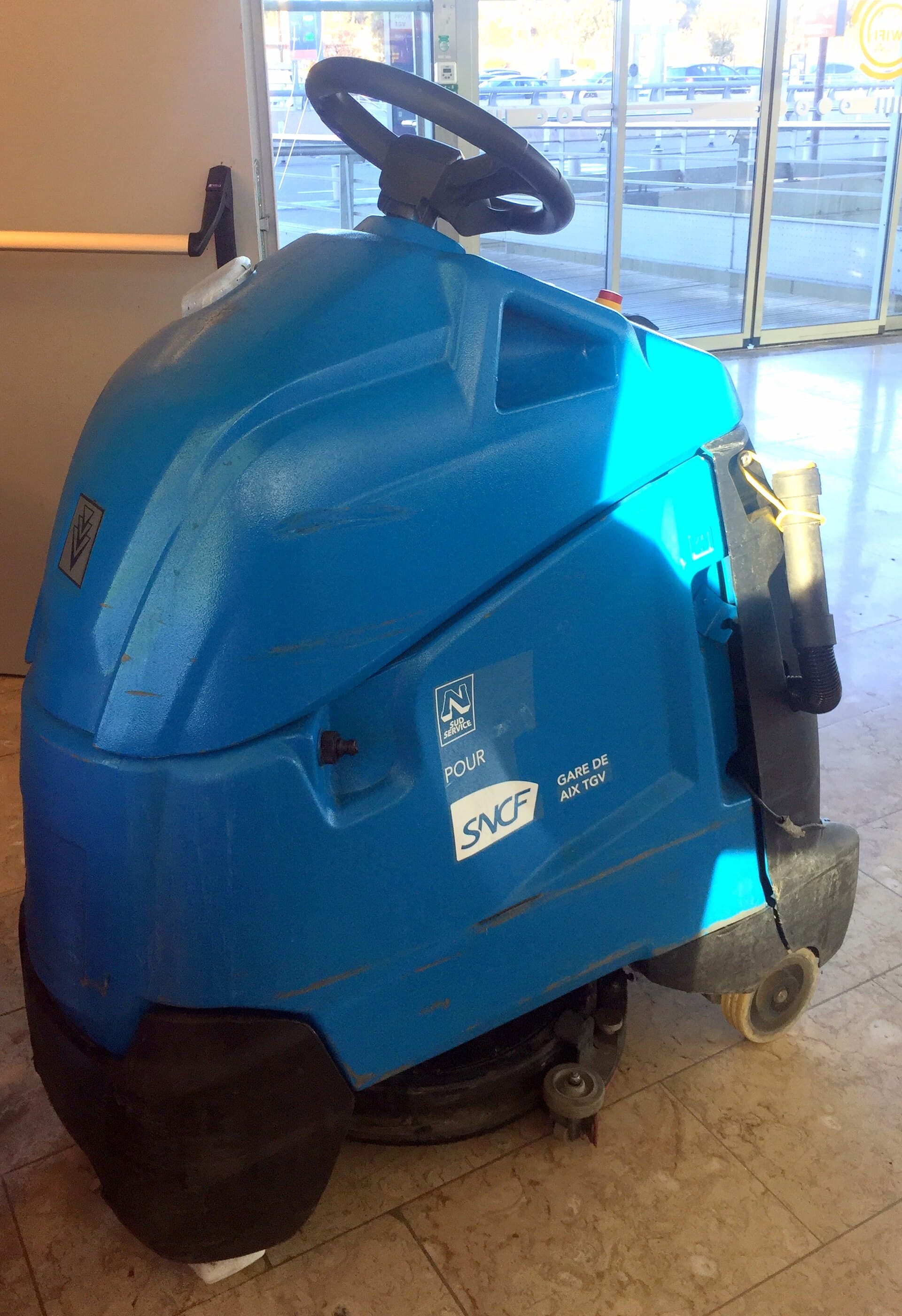
Most cleaning falls do not happen on a greenfield tower. They happen on a wet bathroom floor with a step ladder, on a desktop used as a platform to dust a bulkhead, or on a handrail someone thought was a step. The spectacular atrium job is rarer and better documented. The ordinary job is the one that ends up in the workers compensation file.
Safe Work Australia’s model Code of Practice on managing the risk of falls at workplaces is the document to have on the shelf. Victoria uses its own OHS framework and a compliance code in the same territory. The duty is not “construction only”. A person conducting a business or undertaking must manage the risk of a fall, including a fall from one level to another and a fall into a hole. A toilet cubicle with a high, wet ceiling is a workplace. So is a retail void.
This piece sits in WHS and compliance because the method is the control. The cloth and the chemical are the easy part.
The bathroom ceiling is the honest case
Amenities high-cleaning is in almost every commercial specification: dust and cobweb the ceiling, wipe the light diffuser, reach the top of the partition, descale the shower head. The floor is tile. The floor is often wet because the last task was the bowl. The ladder in the cupboard is whatever the previous contractor left.
That is a falls problem and a chemical problem standing on the same three rungs. The controls are not glamorous:
- Dry the floor, or cone it and wait, before any feet leave the ground.
- Use a platform ladder or a step with a large, stable base that is rated for the person and the gear. Domestic three-steps are not a commercial system.
- Keep three points of contact. Tools on a belt or a hook, not in a hand that should be on the stile.
- Do not over-reach sideways to the next cubicle. Move the ladder.
- Do not stand on the toilet lid, the cistern, the partition or the basin.
- A second person to foot the ladder where the risk assessment says the surface is still doubtful.
- Work that needs a chemical above shoulder height is a different task: goggles, and a method that is not dripping acid onto a face.
If the ceiling is a high void or a sloped skylight, you have left the step-ladder conversation. Stop and re-plan.
The same logic applies to high dusting in classrooms and offices: bag racks and desks are not working platforms. Telescopic poles exist because people used to stand on furniture. Use the pole. If the pole will not do the diffuser, the diffuser is a scheduled access job, not a Friday extra.
Atriums, voids and the shopping-centre light
Internal atriums — retail centres, hotel foyers, civic buildings, university libraries — combine height, public space and a client who wants the glass and the pendants done before trade. The fall is from the floor of an EWP or from a ledge someone should never have been on. The second victim is the person under the work.
Plan the access as the first line of the quote, not as a Tuesday surprise:
- Can the work be done from the ground with an extension tool?
- If not, is the right plant a scissor lift, a boom, a building-maintenance unit already in the site, or a specialist rope or swing-stage contractor?
- What is the floor loading of the concourse or the terrazzo? See the same caution we apply to heavy floor machines.
- What is the exclusion zone, and who owns it — your spotter, centre security, or both?
- When can the zone be held? After close is not the same as “early, while a few shops are still receiving”.
- How do you get plant in? Some atriums need a machine that fits a service lift or a loading dock with a height limit.
A boom-type EWP with a boom of 11 metres or more needs a licensed operator (WP class). That is a high-risk work licence, not an in-house ticket you printed. Shorter booms and scissor lifts still need a competent operator, familiarisation on that machine, and a site induction that covers overhead services, glass, and the fact that a shopping-centre void is full of decorative things you can hit.
Rescue is part of the plan. If the boom fails extended, who brings the person down? “Call the fire brigade” is not a method you write after the event. The hire company and the site should both be able to answer.
Weather still exists under a glass roof. Condensation, heat and glare change how people behave on a platform. So does a public audience. Schedule it when you can hold the floor.
Ladders versus EWPs is a risk decision, not a hire preference
Ladders are not banned. They are last in the line after you have asked whether you can eliminate the height, do it from the ground, or use a stable platform. A platform ladder for a bulkhead is often the reasonably practicable control. A straight extension ladder against a foyer wall, footed by a junior, for a ten-minute wipe of a high sign, is how the industry keeps paying claims.
EWPs reduce the “standing on the rungs” problem and create plant risk: crush against a beam, drive-off, floor collapse, overhead power on an external façade, and people walking under the basket. They are the right tool when the working height, the reach or the duration makes a ladder unreasonable. They are the wrong tool when the aisle cannot hold them, the operator is unlicensed or unfamiliar, or the only available window is during trade with no exclusion zone.
Scaffold and mobile towers have their own rules and their own competent persons. A tower that a cleaner assembled from memory in a school hall is not a plan.
Specialist access — BMUs, rope access, building cleaners who live in that trade — exists because a general commercial contractor should not invent a façade method. If the tender hides high glass in “internal and external glass as required”, price the specialist or exclude it. The atrium light is the same conversation.
Client pressure is foreseeable
Facility managers, centre managers and school principals will ask you to “just quickly” do the high thing because an event is tomorrow, the minister is visiting, or a tenant has complained. That pressure is foreseeable. Your system has to survive it.
Useful answers that are not a speech:
- We can do it from the ground today with the pole. The diffuser needs a lift on the next scheduled close.
- We can do it tonight if the exclusion zone is held and the hire is available. Here is the variation.
- We cannot use the ladder in the cleaners’ store. We will bring a platform or we will not do the task.
Write the high-access items into the specification response so the argument happens at award, not at 11pm. If the client’s own ladder is the only one on site, your SWMS still applies to your worker. You do not inherit a unsafe method because it has a council sticker on it.
Subcontracting the high work does not subcontract the duty to engage someone competent. Check the licence, the insurance, and the method. The labour-hire and host problem is the same shape.
SWMS and the paperwork that has to match the night
Under the model WHS Regulations, high-risk construction work includes work where there is a risk of a person falling more than two metres. Construction work includes maintenance and repair of a building in a lot of the cases cleaners wander into — not only a builder’s site. When that definition bites, you need a safe work method statement before the work starts, and you need to follow it.
Even when a clever reading would say the bathroom ceiling is not “construction”, you still need a documented method. Call it a SWMS, a SOP or a task procedure; make it specific:
- The site and the task, not “working at heights” as a genre.
- The fall hazard (wet tile, void, fragile ceiling, atrium edge).
- The access equipment, named.
- The exclusion zone and the spotter.
- The weather or trade-hours limit.
- The rescue.
- The names or roles allowed to do it.
- The chemical and PPE if the task is more than a dry dust.
Workers have to be told about the SWMS and be able to stop when the site does not match it. A laminated generic heights SWMS in the van that mentions “scaffolding and roof work” and never mentions a shower ceiling is a gift to a barrister.
Training is familiarisation plus the licence where a licence is required. A ride-on scrubber ticket is not an EWP ticket. A weekend with a relative who hires scissor lifts is not competence.
Permits sit on many client sites: a centre’s work-permit, a hospital’s engineering permit, a school’s after-hours approval. Your SWMS does not replace theirs. Carry both.
High dusting, vents and the job that grows
High dusting is in the weekly or holiday scope of education and a lot of commercial. It becomes heights work when the pole is not enough. It becomes a contamination job when the dust is from a plant room or a ceiling void you have not assessed. Do not assume a civic ceiling is harmless fluff. If you are opening a return-air grille in an older building, you may be in a dust and fibre conversation that needs more than a microfibre wand.
Holiday programs — the same shutdown in which people also strip vinyl — are when supervisors stack tasks. Heights plus wet floors plus extra casuals is a bad stack. Sequence it: dry high work first, or wet floor work first, not both in the same aisle.
External high work — canopies, entry glass, first-floor ledges — brings public traffic, weather and, on anything near overhead power, a completely different exclusion. Do not let an internal commercial crew drift onto a façade because they have a ladder in the van.
What a competent contractor looks like at 6am
They can point to the platform ladder, the pole set, the named EWP operator, the SWMS for the atrium, and the variation that was sent when the client asked for an extra pendant. They can point to the bathroom method that starts with a dry floor. They do not have a person on a cistern.
They also know when the job is not theirs. Rope access, a fragile roof, a heritage void, a light that sits over a void with no plant access — those go to a specialist, or they come out of the scope. Walking away is a WHS control. It is also how you still have a roster on Monday.
Heights in cleaning is not a toolbox talk you recycle from a construction subcontractor. It is the amenity, the bulkhead and the atrium, written as they really are, and refused when the only method on offer is hurry.
Questions contractors ask
- Do cleaners need a SWMS for changing a high atrium light?
- If the work is high-risk construction work — and maintenance work with a risk of falling more than two metres often is — the model WHS Regulations require a SWMS. Even when the lawyers would argue about “construction”, you still need a documented risk assessment and a method that is not “Bob on a ladder because the centre opens at nine”.
- When does an EWP need a high-risk work licence?
- A boom-type elevating work platform with a boom length of 11 metres or more requires a WP-class high-risk work licence. Scissor lifts and shorter booms generally do not, but they still require training, a spotter where the risk assessment says so, and a site that has planned the floor loading and the exclusion zone.
- Can we refuse a bathroom-ceiling job if the client will only supply a domestic step ladder?
- Yes. You can offer a method that is safe — a platform ladder, a scaffold, an EWP, or a contractor who specialises in the void — or you can decline the task. Doing it on the client’s three-step because “it will only take a minute” is how people break an elbow on wet tile.